OpenRouter gives developers one interface to manage hundreds of #Artificial Intelligence models — including offerings from OpenAI, Anthropic, and open weight labs — allowing for easy comparisons and s...
www.benzinga.com
Stripe Eyes OpenRouter in Potential $10 Billion AI Infrastructure Deal
Stripe is exploring a potential acquisition of OpenRouter that could value the AI routing platform at nearly $10 billion.
SM
Sam Mendozacommented · 2 months ago
Nvidia has agreed to buy Hugging Face, the GitHub-like repository of open-source #Artificial Intelligence models, for $12.9 billion, roughly 80 times the startup’s forward revenue, after deal talks kicked off when another suitor came calling. Salesforce, an investor in the company, has been among the interested parties, the report said. Nvidia is purchasing the startup to shepherd the open-model ecosystem as a counterweight to closed-source model developers such as Anthropic and OpenAI, both of which are building their own AI server chips to lessen their reliance on Nvidia’s. Owning Hugging Face also revives Nvidia’s cloud business. #(Cool) Dev https://www.cnbc.com/2026/08/27/nvidia-hugging-face-acquisition.html
If Jev is outputting 193x faster responses for structured decisions, does this mean text generation was actually holding back real-time AI agents all along? What's the first workflow you’d test this o...
medium.com
Jev Makes LLMs Look Slow and Expensive
Jev from TypeSafe AI — A New Kind of AI That Makes Decisions Far Faster and Cheaper Than LLMs.
SM
Sam Mendozacommented · 3 days ago
Hot take: The wrapper and your business logic will always matter more than whether you rent Jev or own Laya. Models are becoming commoditized config settings https://aiadvances.org/jev-vs-laya-the-free-ai-model-that-might-cost-you-more-a95dbec83280
Driven by a series of new releases, Chinese open-source #Artificial Intelligence models topped global token usage this month on AI hosting platform OpenRouter, ending a year of market dominance by US ...
www.scmp.com
China’s MiniMax, Moonshot top AI token use ranking, ending year of US dominance
AI hosting platform OpenRouter’s latest ranking shows high demand for Chinese open-source models following a series of new releases.
SM
Sam Mendozacommented · 3 days ago
Embracing the open-source approach is the only way for Europe to achieve technological independence, Alibaba Group Holding chairman Joe Tsai said, pointing to China’s own open-source drive as a blueprint for innovation under constraints. #🇨🇳 ChinA.I. 🤖🧠🦾🤖 For Europe, which shares China’s deep roots in traditional manufacturing, the open-source approach presented a unique opportunity, Tsai said, highlighting that factories in the region possessed highly valuable manufacturing data. #ScholER “You don’t want to feed it into some closed-source API. You want to maintain those data and be able to take open-source models and then further train your model, and improve it for your use,” he said. #(Cool) Dev The comments, which were made by the Alibaba co-founder earlier this week at the Wave tech event in Italy, came as Alibaba itself is doubling down on the open-source approach to become a leading player in the global #Artificial Intelligence boom. https://www.scmp.com/tech/tech-trends/article/3370428/open-source-ai-europes-only-path-tech-independence-says-alibaba-chairman-joe-tsai?utm_source=cm&utm_medium=email&utm_campaign=GME-O-enlz-uv&UUID=f9aaf50d26626de042873bfe2733d91d&utm_content=20261013_Tech_FW&CMCampaignID=0edc833735322b307a83042df8abbca3
Nvidia has agreed to buy Hugging Face, the GitHub-like repository of open-source #Artificial Intelligence models, for $12.9 billion, roughly 80 times the startup’s forward revenue, after deal talks ki...
www.cnbc.com
Nvidia agrees to buy Hugging Face for $12.9 billion, report says
Nvidia reportedly agreed to buy open source AI platform Hugging Face for $12.9 billion as the chipmaker expands deeper into the AI ecosystem.
JC
Jerome Codycommented · last month
Hugging Face is a popular archive of open-source AI models—yes, the name is a distraction—used by developers to make applications and tailor them to specific AI chips. The purchase could theoretically give Nvidia the power to influence the chips those developers use, although Huang insisted in a blog post on Thursday the company won’t do that. “Hugging Face will remain an open platform for the entire AI ecosystem,” he said. Still, as one commenter on X pointed out Thursday, Nvidia could set things up so that models work fastest on its hardware, giving it an edge over its rivals. There’s no question chip rivals aren’t thrilled. As one executive at a rival firm told Phoebe, Hugging Face is “100%” important to hardware designers, which might find it hard to trust the business once Nvidia owns it. Those rivals are likely to be the ones complaining the loudest to antitrust authorities, we’d bet. (The U.S. Department of Justice started looking into various other complaints from Nvidia competitors a couple of years ago, but that didn’t seem to go anywhere.) The argument in favor of the deal is that American business needs a thriving open-source AI sector, if only to keep a lid on costs. Given how hard it is to make money in open source, there’s no guarantee the sector would thrive on its own. But Nvidia is emerging as an open-source champion—with this deal; with the Nemotron open-source models it is developing; and with billions of dollars it has handed over to open-source AI developers such as Thinking Machines Lab, Poolside, Reflection and others so they can continue to afford its pricey chips. That makes Nvidia a counterweight to the rich closed-source AI firms, namely Anthropic and OpenAI, which also depend on Nvidia hardware but are racing to develop their own alternatives (with Broadcom’s help). Indeed, Hugging Face hopes Nvidia will help it expand its user base to 100 million from 18 million currently, according to Clem Delangue, Hugging Face CEO. Still, there’s no getting around the amount of power Nvidia is amassing, with sizable stakes in neoclouds such as CoreWeave and Nebius; AI firms OpenAI, Anthropic and SpaceX; hardware makers such as MediaTek and Intel; and a slew of firms in the data center field that are helping it lock in its hardware bundle. Chances are Nvidia will get this deal past U.S. regulators, given the Trump administration’s focus on AI progress. How it fares with regulators in other countries—particularly in Europe, where Hugging Face has a big presence—is a whole other question. https://www.theinformation.com/articles/nvidia-faces-doj-antitrust-probe-over-complaints-from-rivals?utm_campaign=article_email&utm_content=article-17768&utm_medium=email&utm_source=sg&rc=gzsl71
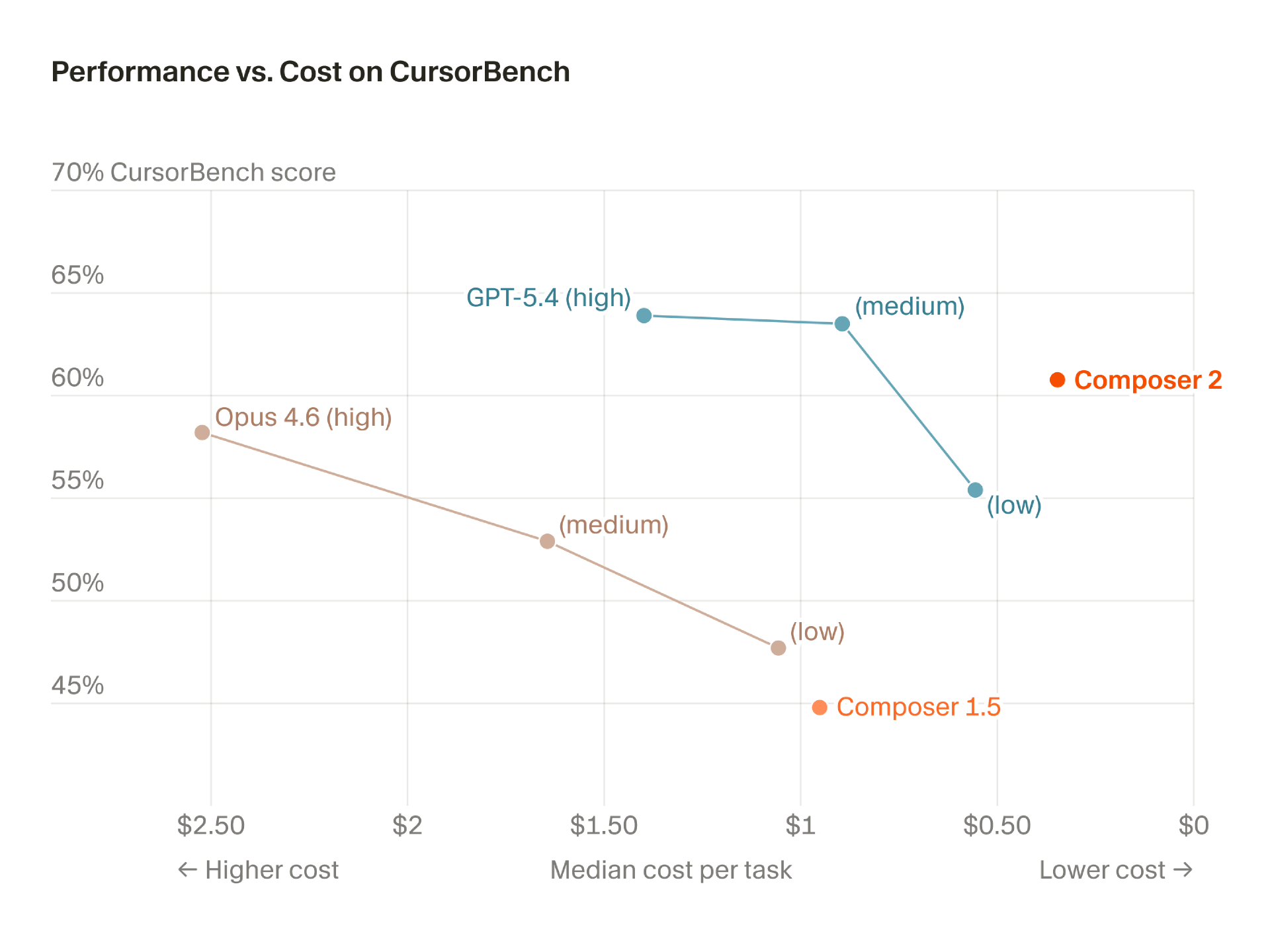
If Cursor pulled it off (we'll know soon in production) this is a major win for application layer companies (and loss for foundation models). #(Cool) Dev
"Three months ago, the consensus was that C...
TS
Todd Smithcommented · 2 months ago
OpenAI plans to cut Cursor’s access to its models on Nov. 12, following the company’s acquisition by #SpaceX 🚀 , citing contract concerns. https://www.cnbc.com/2026/08/29/openai-cursor-spacex-model-access.html?_bhlid=129722684e43a9a27bb4374e0562a07bcde0df3d
eOpenAI is taking the fight for developer #(Cool) Dev wallets to OpenRouter, discounting its top models to gain ground on Anthropic (https://www.theinformatio.....
www.theinformation.com
OpenAI Gains Against Anthropic Among OpenRouter Customers
OpenAI has found a new place to fight Anthropic for developer wallets: OpenRouter, a service AI app developers use to access models from different providers from one application programming interface.
SM
Sam Mendozacommented · 3 days ago
If it’s Monday, it must be time for another #Artificial Intelligence model release. This time, it was Meta Platforms’ turn, unveiling Muse Wonder, which it claims can “deliver state-of-the-art performance” on certain tasks. It was a triumphant moment for the company, whose AI efforts previously went through a slump that prompted a massive hiring binge over the past 14 months or so. It now claims it is “pushing the frontier” of AI. #(Cool) Dev That would be notable if only everyone wasn’t claiming to be doing the same thing. Two weeks ago, Google unveiled its latest model, Gemini 4 Argon, which it says “delivers frontier performance in complex workflows” across various subjects (you wouldn’t want it to deliver frontier performance in simple workflows, would you?). In early September, OpenAI announced GPT-6 Astra, which it said was “state of the art on computer use, browsing, software engineering, cybersecurity, science and professional work.” Also in September, Anthropic introduced Claude Fable 5.1 and Mythos 5.1, which it claimed to be “the world’s most advanced models for coding and knowledge work.” AI executives want to trumpet every advance, hoping it will draw more customers and in some cases investors. You have to wonder, though, whether anyone can keep up with the blizzard of announcements, much less care about them all. Businesses are increasingly opting for less advanced models to save money for much of their computing needs, reserving any use of the most advanced (and priciest) models for very specific tasks. Indeed, only 14% of the AI model usage via OpenRouter ran through the 10 highest-quality models in the third quarter, down from 55% in the first quarter of last year. That’s a result of the falling cost of less advanced models that are “good enough” for most tasks. Consumers, who are the target audience for Meta’s Muse personal agent, certainly don’t need the most advanced AI models for everything they do. Yet Meta said its latest Muse Wonder model will “soon power experiences in Muse.” The only impact of that might be on the company’s costs. One of these days the AI firms will realize the frontier is a lonely place to be. #Data is beautiful https://www.theinformation.com/articles/leading-edge-ai-models-losing-allure-developers?utm_campaign=article_email&utm_content=article-17974&utm_medium=email&utm_source=sg&rc=gzsl71